

- Runtime Headers - headers Bruno adds on every request as runtime headers (for example
User-Agent,Accept,Accept-Encoding). - Request Headers - headers you add yourself. These can be standard HTTP headers or custom names.
Create request headers
- Open a request in a collection.
- Open the Headers tab.
- Under Request Headers, enter Name, Value, and an optional Description.
- Save and send the request.
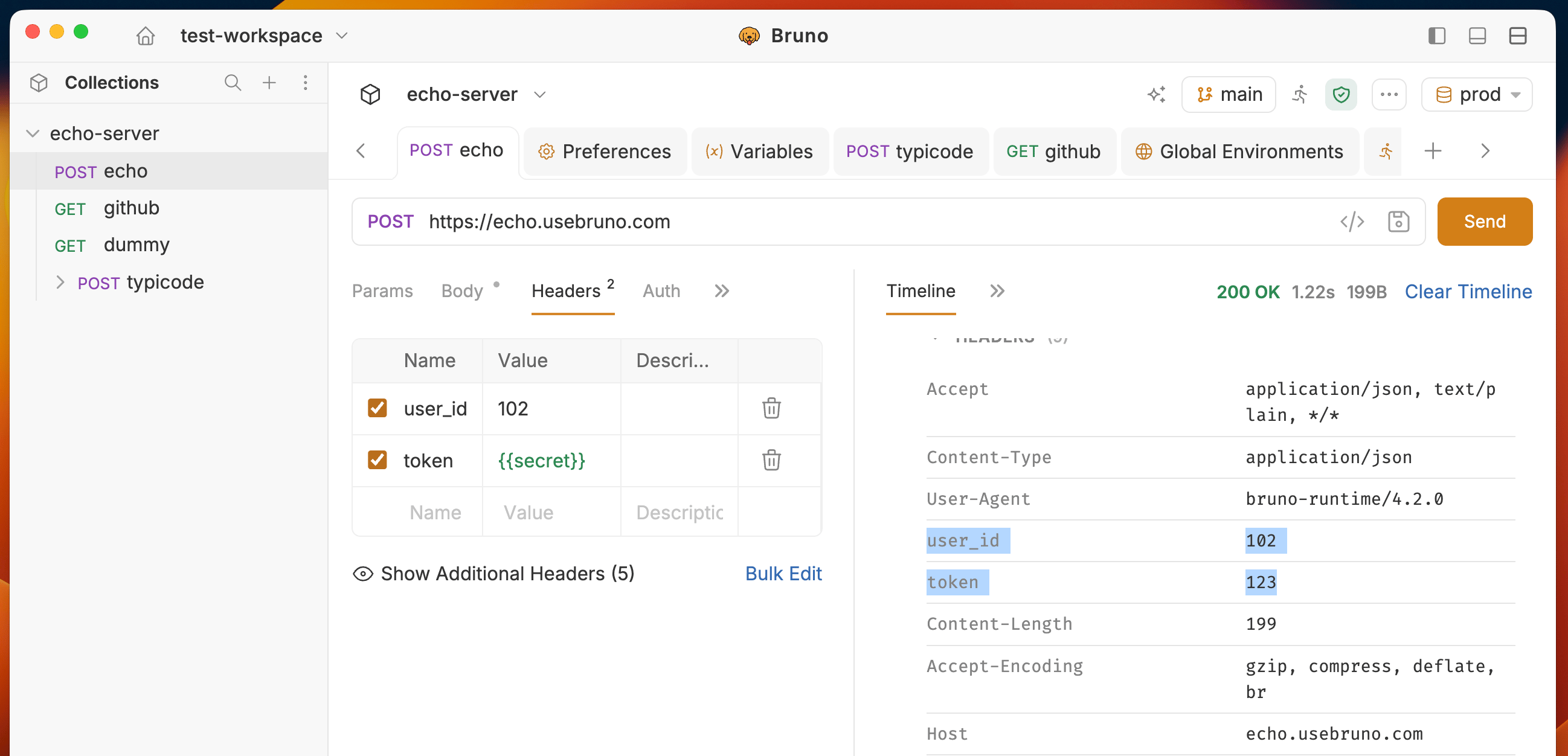
Runtime (default) headers
Default headers are sent with every request. You can see and disable some default headers in Bruno.Host is required by HTTP and cannot be disabled. Its checkbox is disabled.
The Headers tab lists every inherited header that will be sent. Click Show Additional Headers to view them.
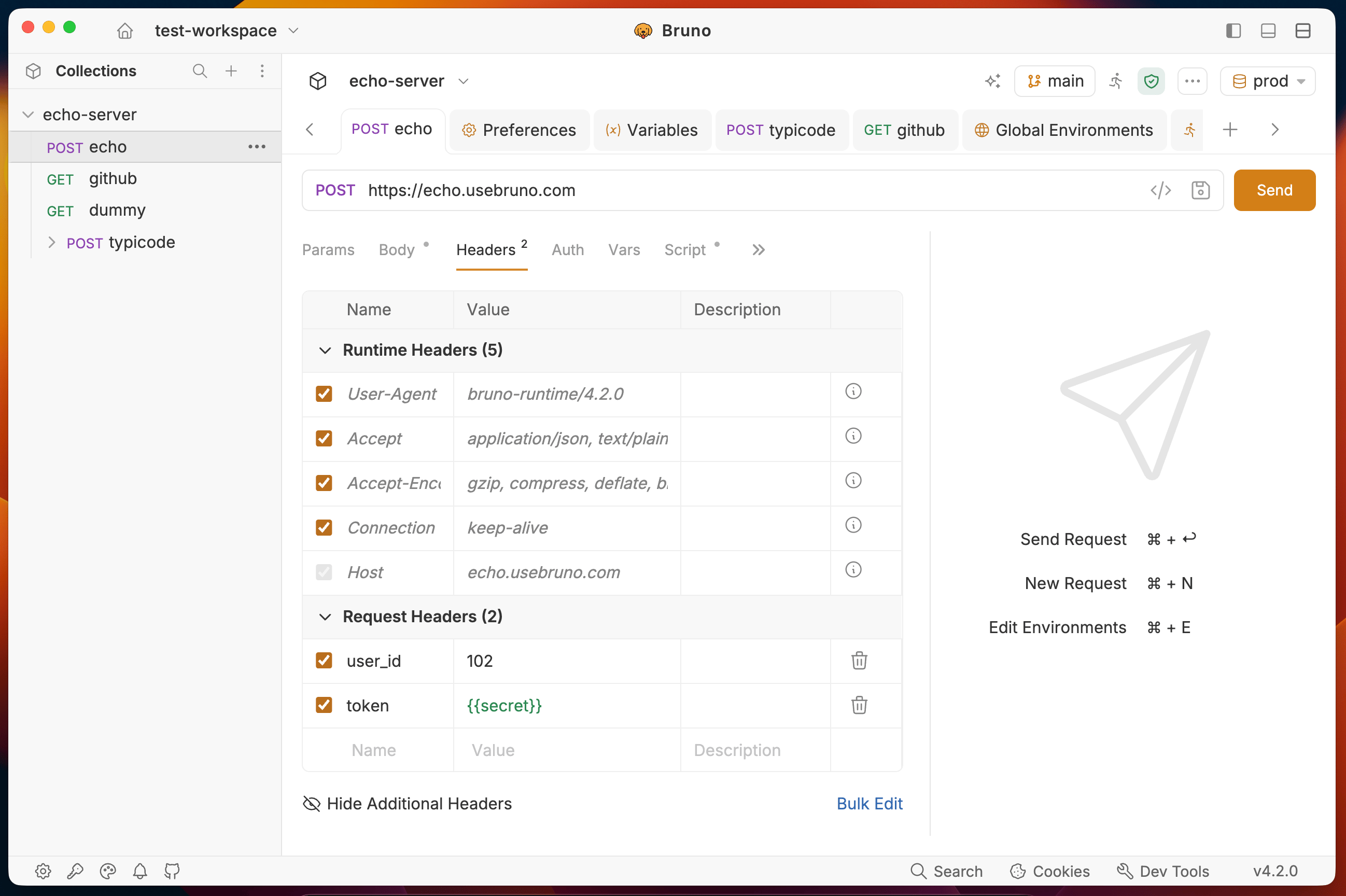
Disable a default header
- Open Runtime Headers.
- Clear the checkbox next to the header you do not want to send (for example
User-Agent). - Send the request.
Host is required by HTTP and cannot be disabled. Its checkbox is disabled.
Inherited header on/off state is stored per request. Disabling
User-Agent on one request does not change other requests in the collection.