

Import workspace and collections from Git
This feature helps you to share your workspace and collections in an easy and flexible way - meeting the user wherever they are. Once imported, the user now has a Git-synced collections and can seamlessly pull down new changes as updates are made.Things You Need
- Bruno installed on your system.
- A collection or workspace that has been initialized as a Git repository either through the UI or from the CLI.
How to Share Your Collections
- Open Bruno.
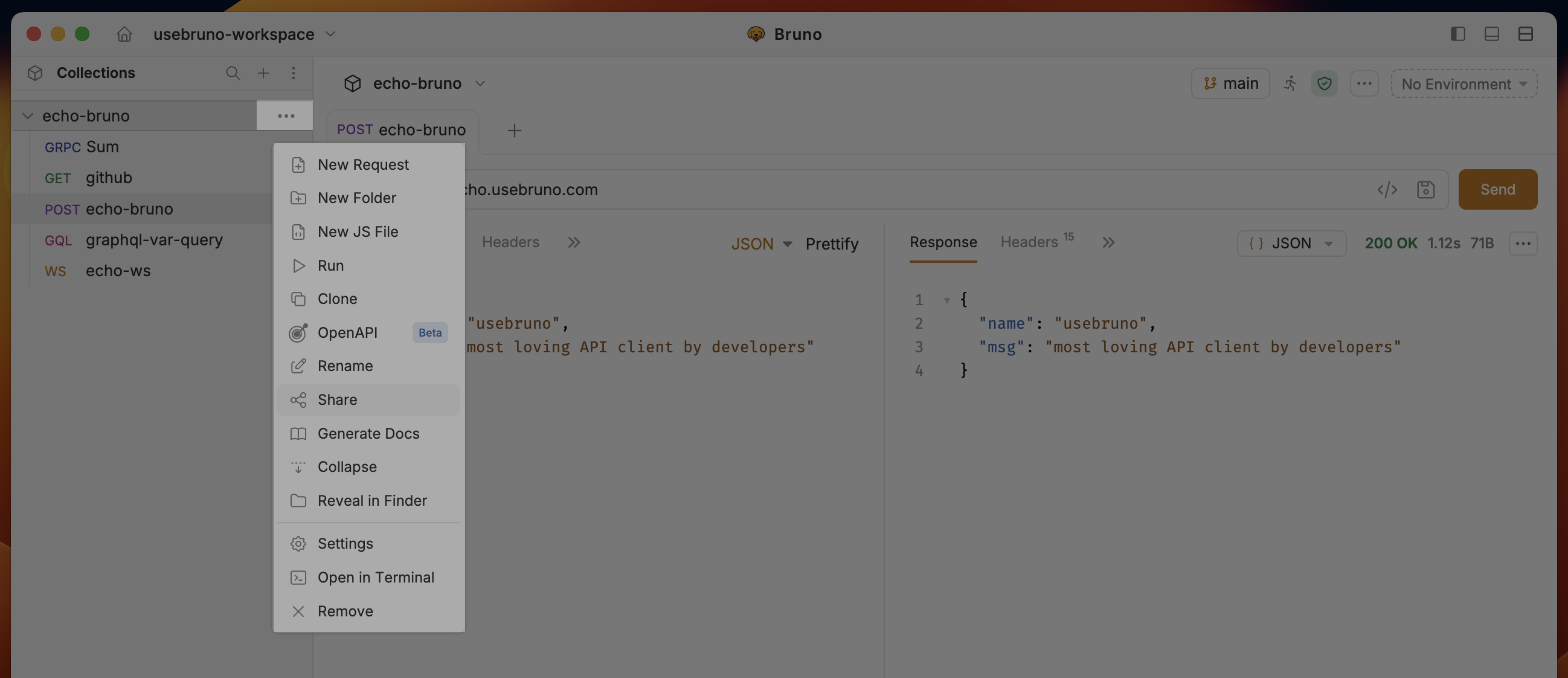
- Either go to the collection Overview tab or click on the
...and selectShare.
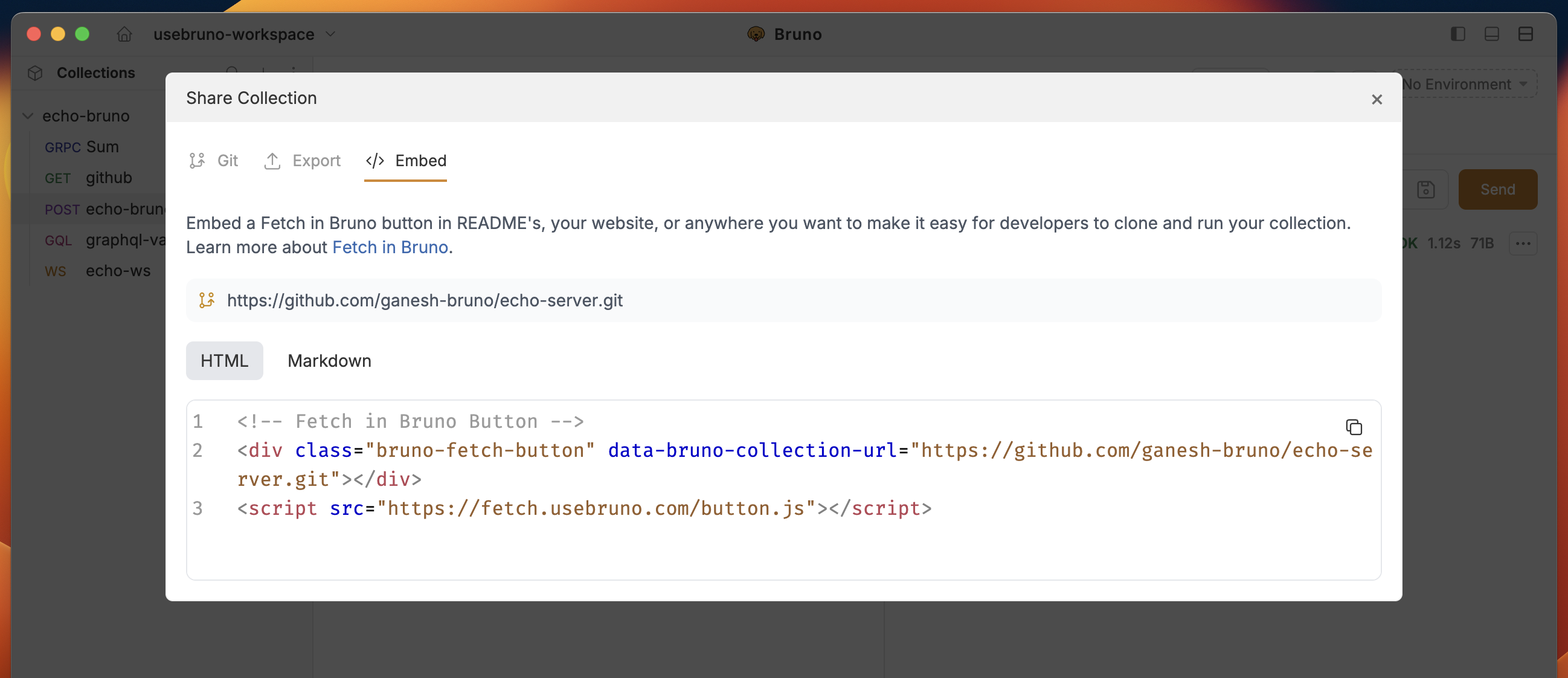
- Go to Embed tab and copy the generated link (HTML or Markdown).
How to Share Your Workspace
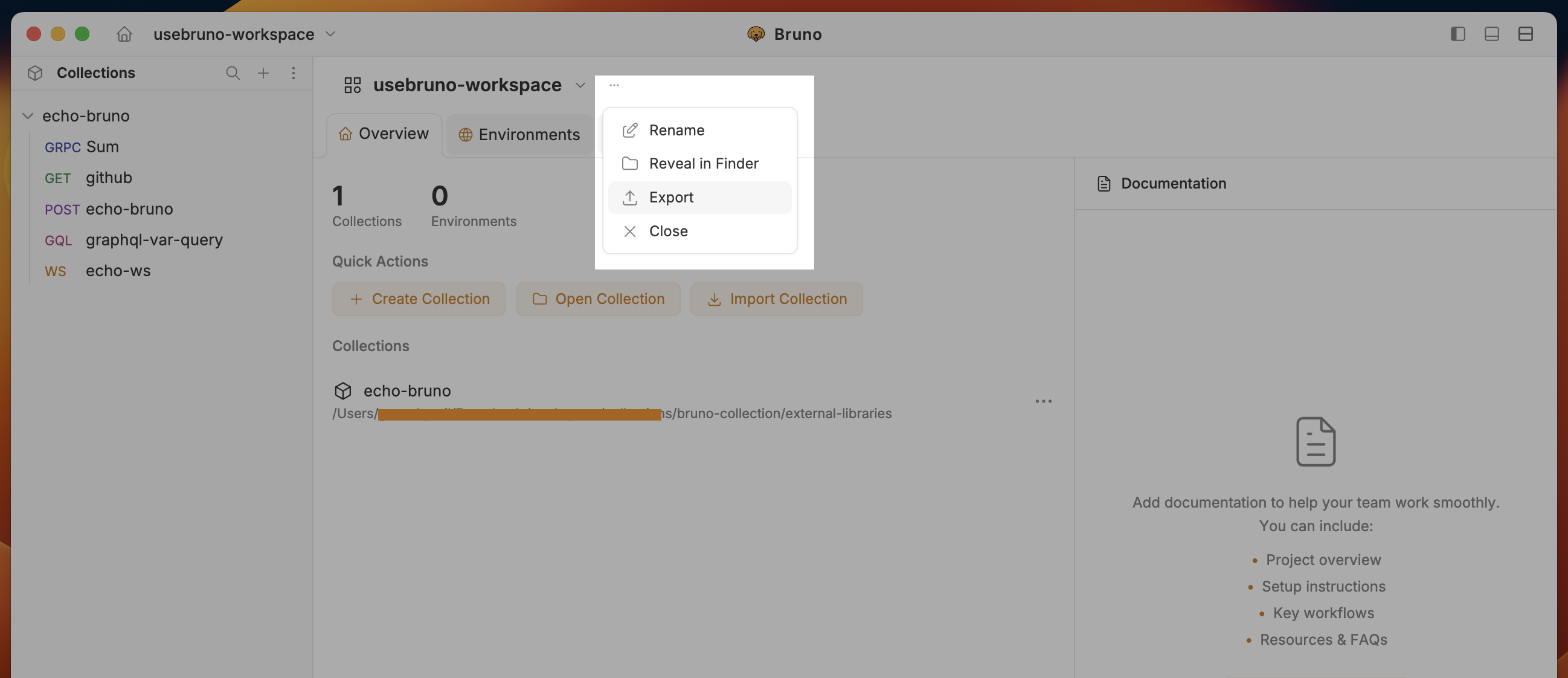
- Go to workspace settings (double tap on the workspace name) and click on the
...and selectExport.
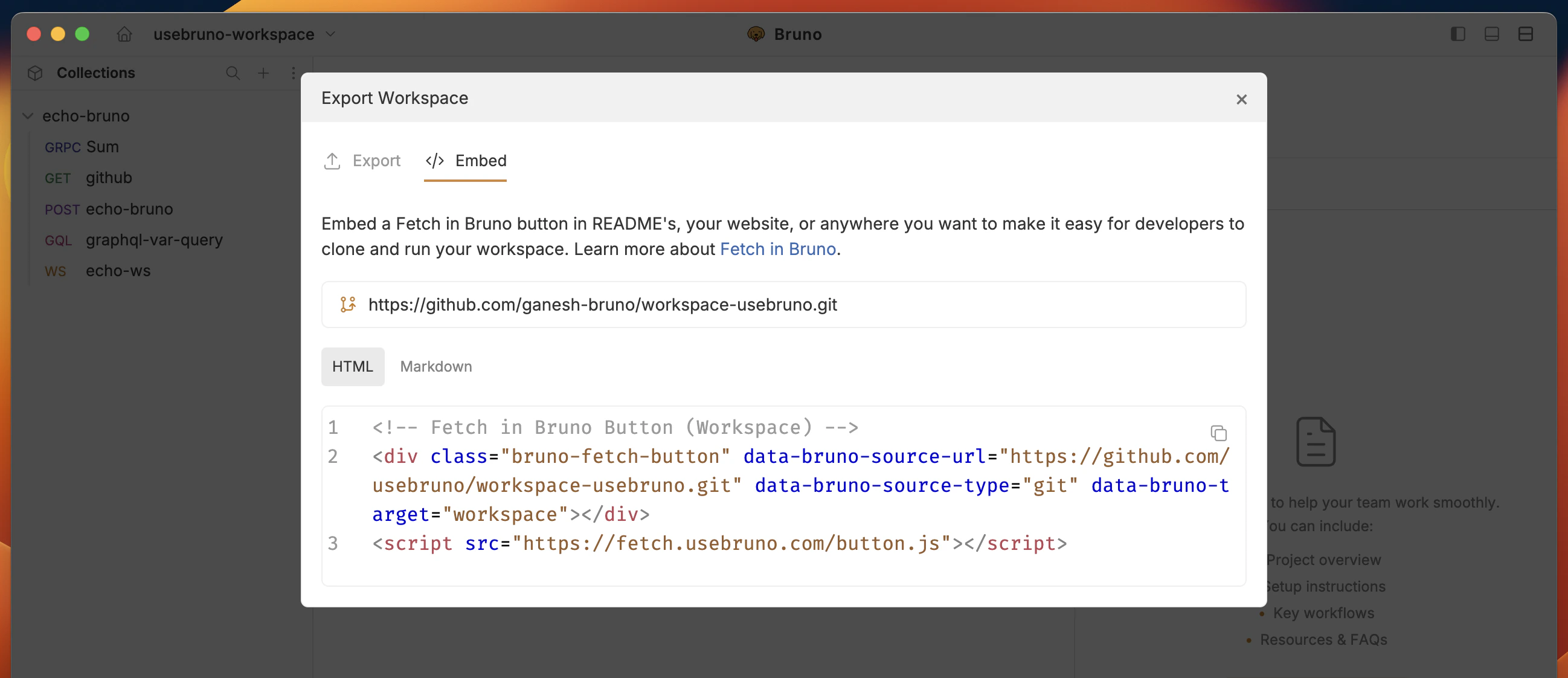
- Go to Embed tab and copy the generated link (HTML or Markdown).
Manual Embedding Options
HTML Format
Markdown Format
How to Open Your Shared Workspace and Collections
The same process will follow for both workspace and collections.
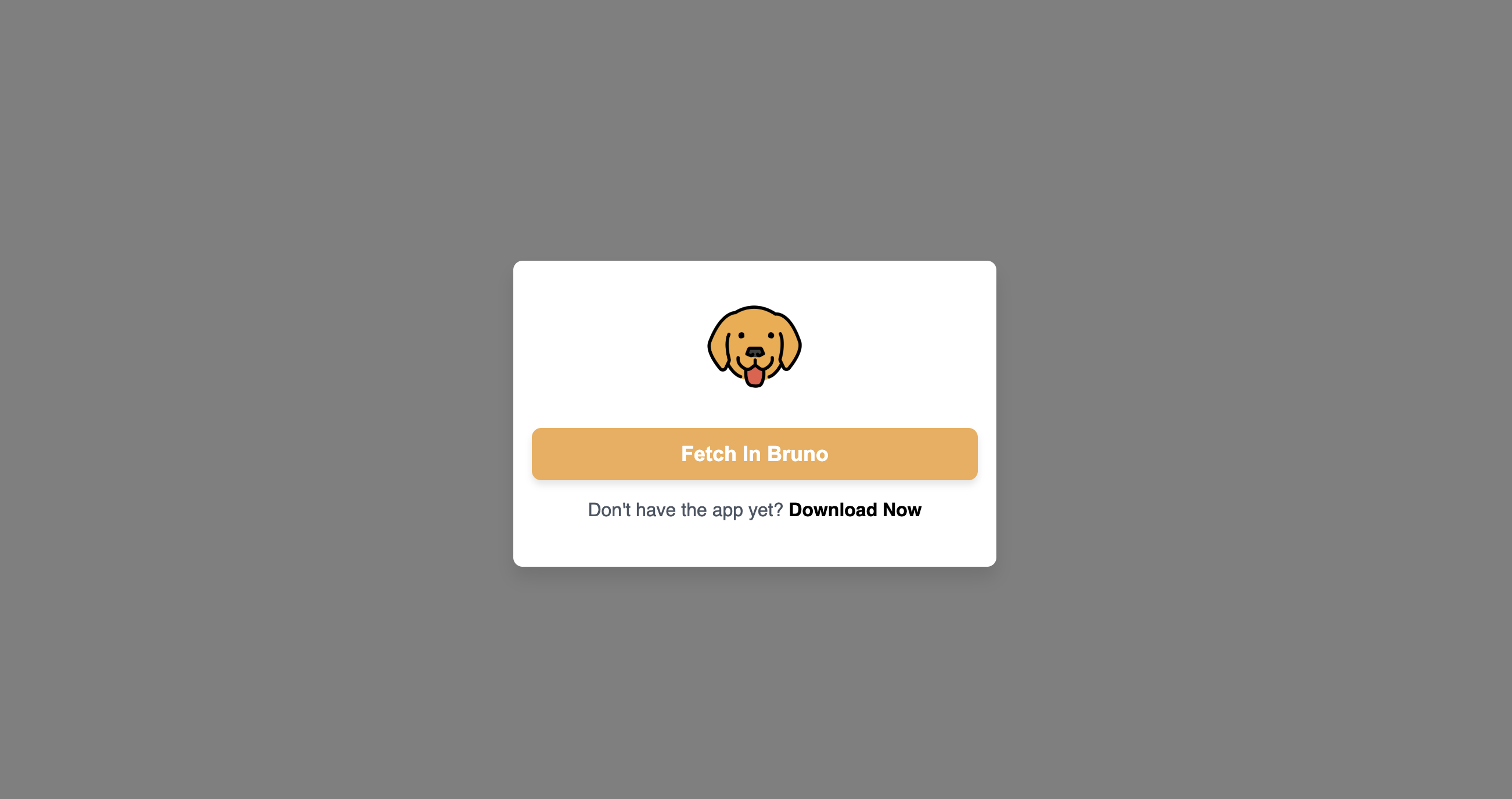
- Click on any Fetch in Bruno button.
- A popup will appear. Click on Open In Bruno.
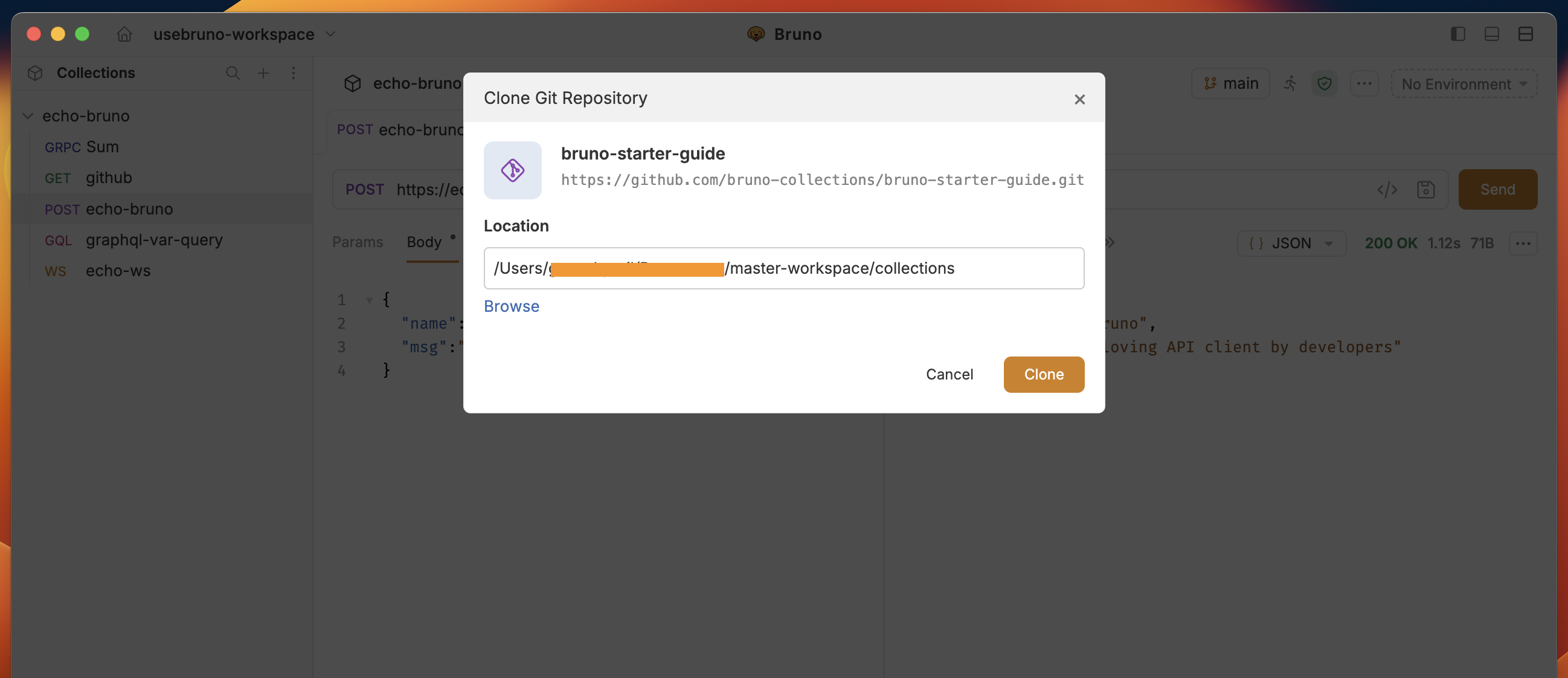
- Choose the location where you’d like to store your collection.
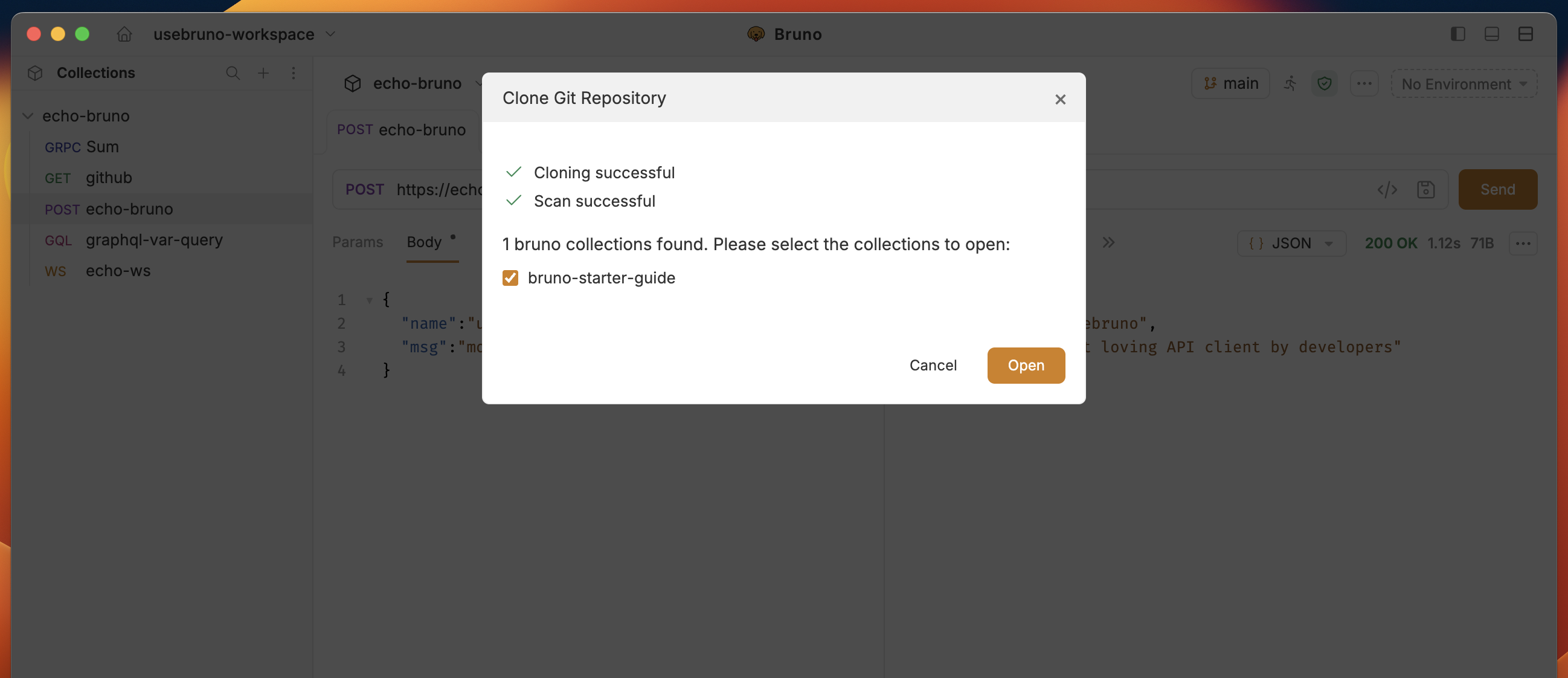
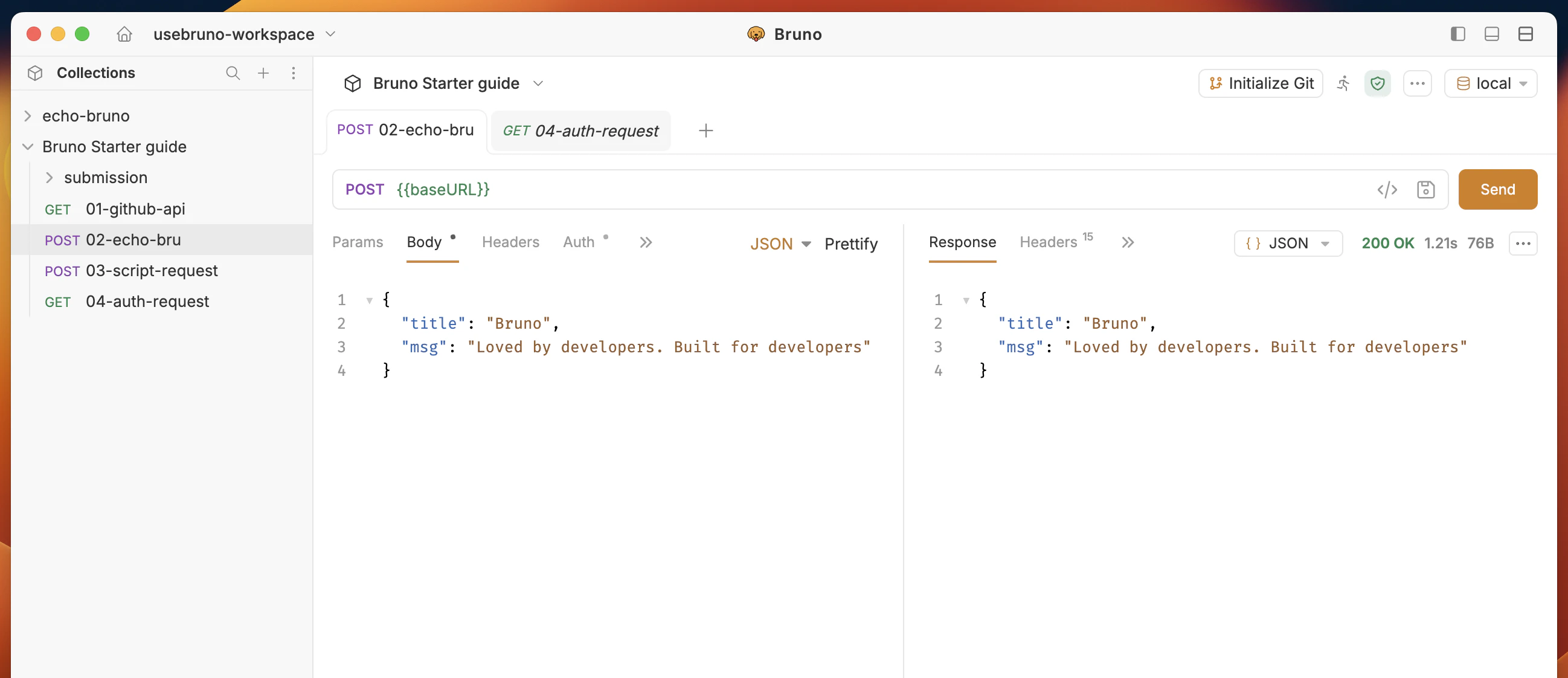
- You will see a list of available Bruno collections in the repository.
Customizations
You can replace the Fetch in Bruno title and logo with your preferred logo and name. Simply follow the changes below in the markdown link:Import collections from OpenAPI Specifications
In addition to importing Git repositories, the Fetch in Bruno button now supports importing OpenAPI specifications directly. This allows you to easily convert any OpenAPI specification into a Bruno collection with a single click.How to Use
- Choose your preferred embedding format:
HTML Format
Markdown Format
- Replace
https://linktoOpenAPIspec.jsonwith your OpenAPI specification URL. - Embed this code in your website, documentation, or any HTML page.
- Fetch the OpenAPI specification from the provided URL
- Convert it into a Bruno collection
- Open it in the Bruno app and prompt the user to choose a location to save the collection