

Bruno supports importing OpenAPI 2.0 and 3.x specifications, in YAML or JSON.
Prerequisites
Before importing an OpenAPI specification, ensure you have:- A valid OpenAPI 2.0 or 3.x specification file (YAML or JSON format)
- Or a publicly accessible URL that returns such a specification
Import Methods
Bruno offers two ways to import OpenAPI specifications:- File Import: Import from a local OpenAPI specification file
- URL Import: Import directly from a publicly accessible OpenAPI specification URL
- Bruno Converter: Programmatically convert an OAS file to a Bruno collection by using our converter ↗.
Importing from a File
- Open Bruno and navigate to your collection
- Click on the context menu (three dots) in the collections panel
- Select Import from the dropdown menu
- Choose OpenAPI option
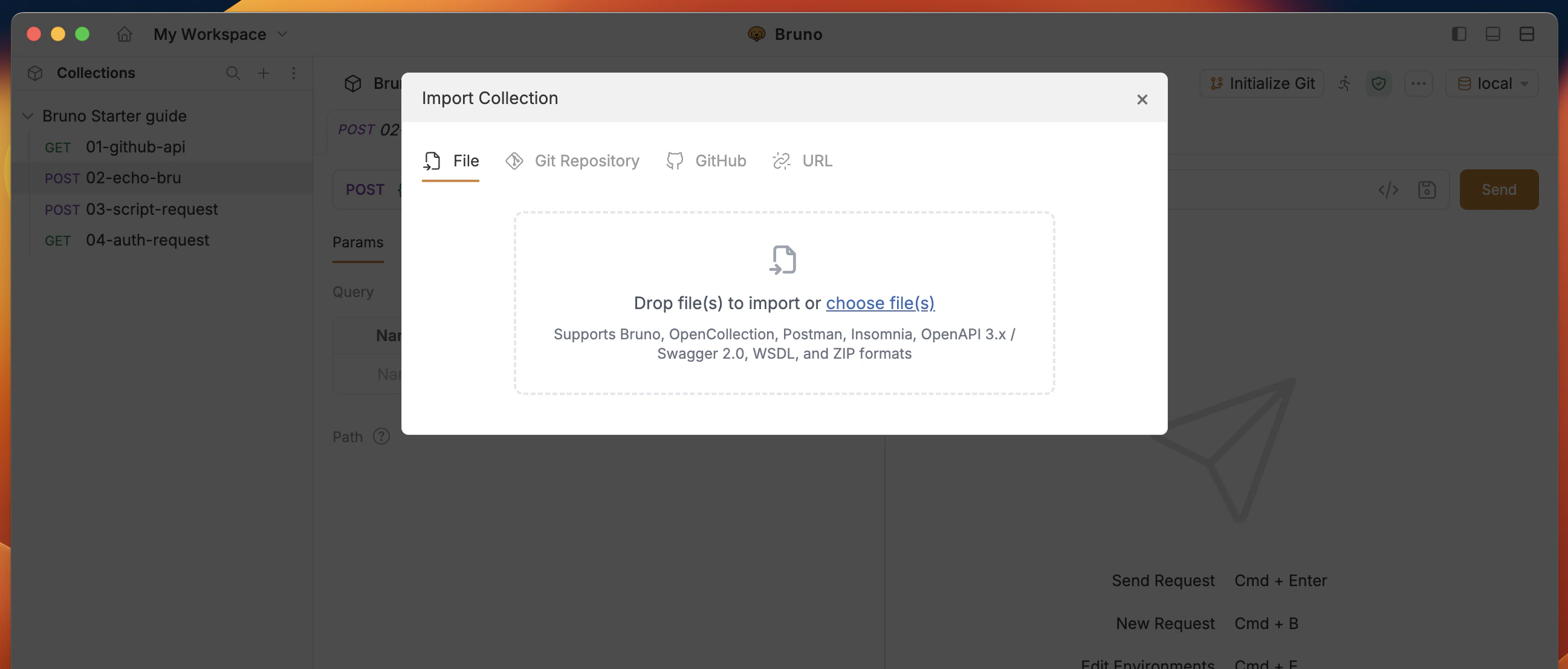
- Browse and select your OpenAPI specification file (
.yamlor.json) - Configure the import settings (see Import Settings below)
- Click Import to create the collection
Importing from a URL
- Select OpenAPI and choose the URL option
- Provide the public URL of the OpenAPI file you’re trying to import
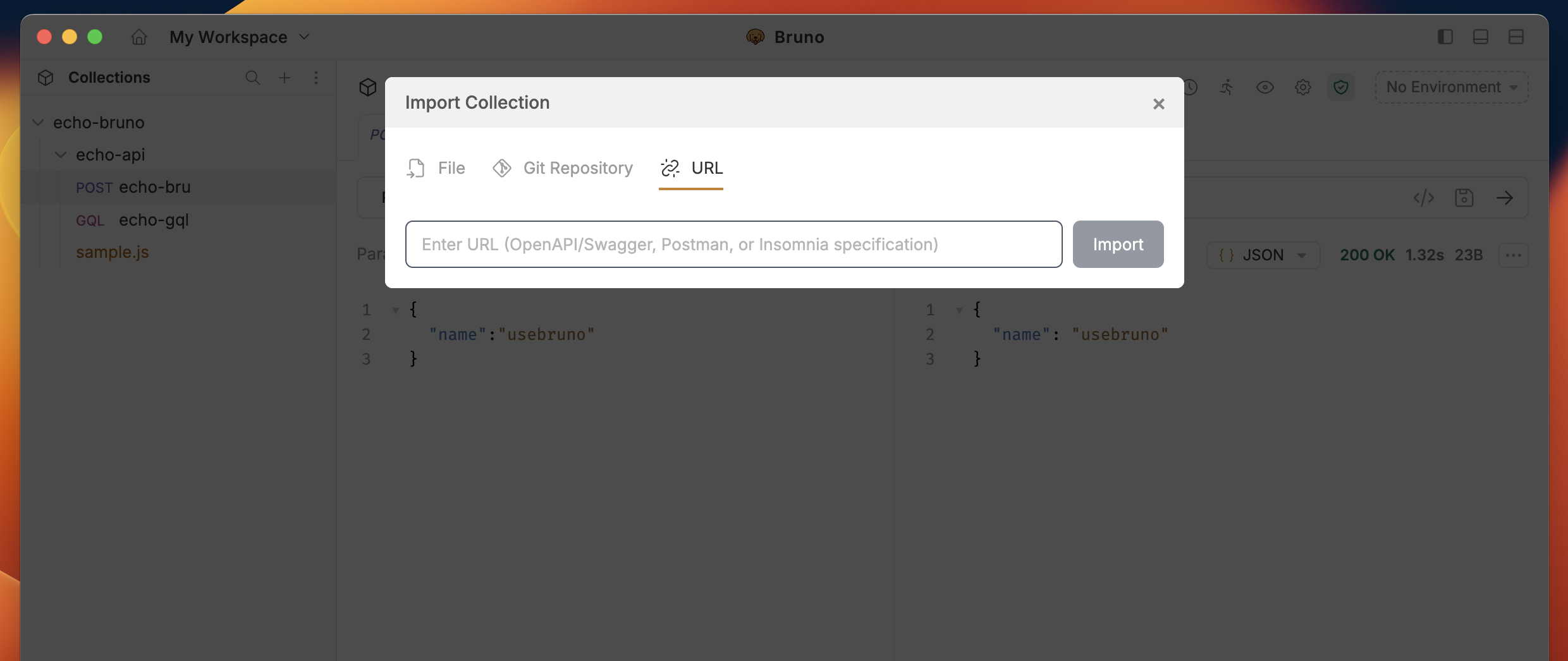
- Configure the import settings (see Import Settings below)
- Click Import to create the collection
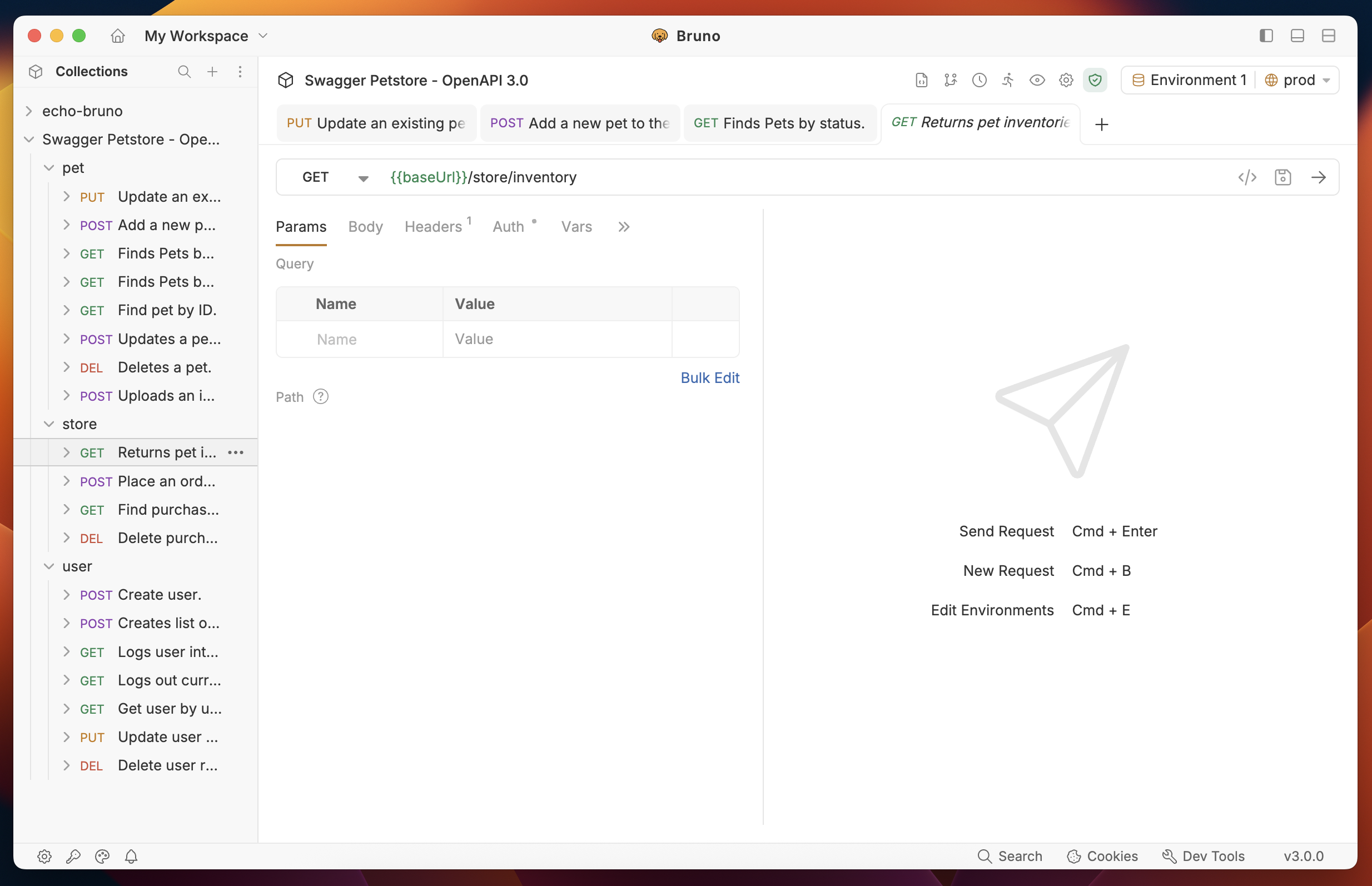
Configuring Import Settings
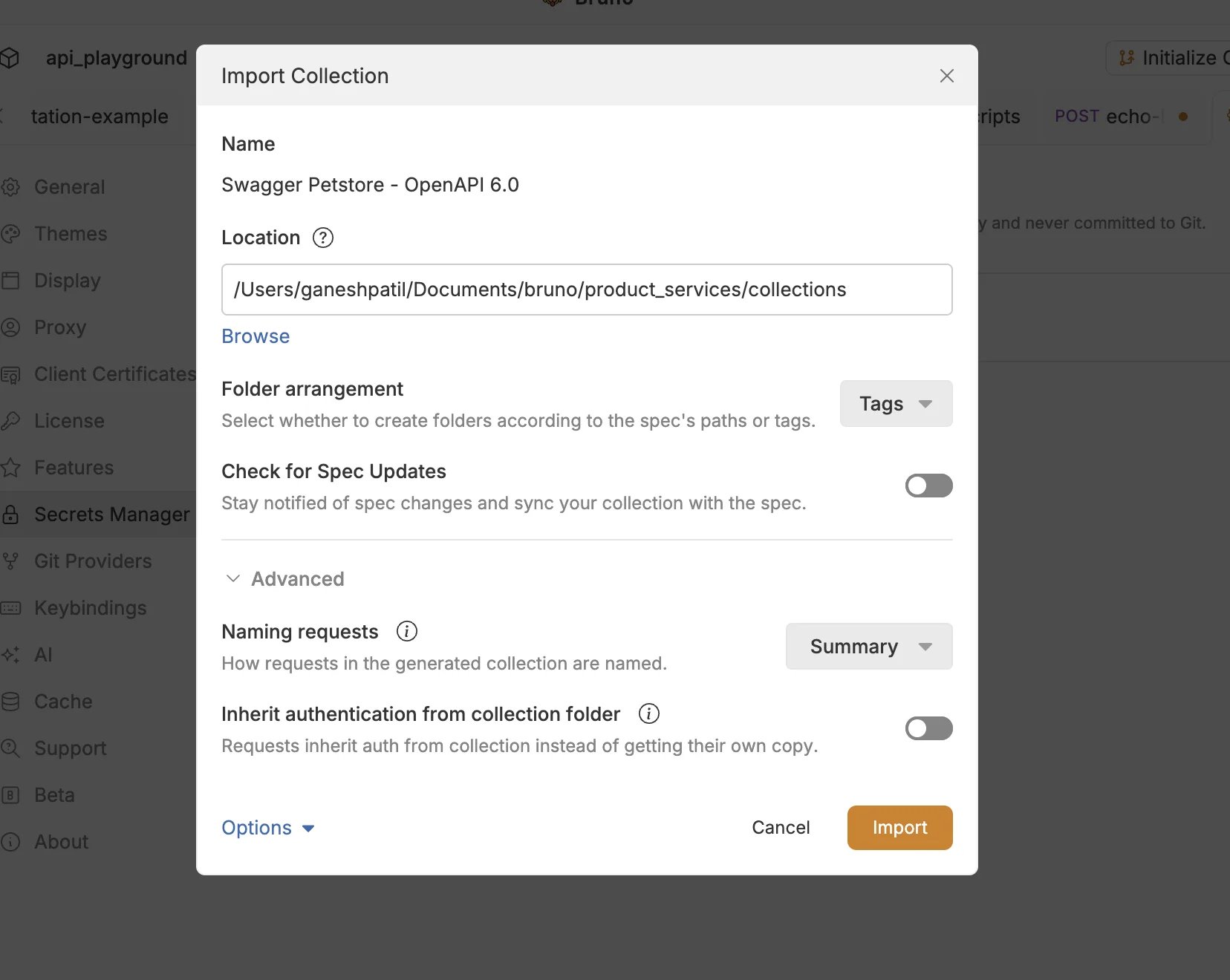
- Select Import Method: Choose either file or URL import
- Choose Folder Arrangement: Select your preferred grouping method from the dropdown:
- Paths: Group by URL path structure
- Tags (default): Group by OpenAPI tags
- Optionally enable Check for Spec Updates to connect OpenAPI Sync on import
- Expand Advanced and configure:
- Naming requests (Summary, operationId, Description, or Path)
- Inherit authentication from collection folder (optional)
- Click Import to create your collection
Import Settings
Bruno provides flexible options for organizing your imported OpenAPI collection. You can choose how to group your API endpoints into folders during the import process.Folder Arrangement Options
When importing an OpenAPI specification, you can choose between two folder grouping strategies:Path-Based Grouping
Path-based grouping organizes endpoints into folders based on their URL path structure. This approach mirrors how APIs are typically organized and provides better compatibility with Postman imports. Example:Tag-Based Grouping (default)
Tag-based grouping organizes endpoints into folders based on thetags defined in the OpenAPI specification. This approach groups endpoints by their functional purpose as defined by the API author.
Example:
Tag Name Formatting: BRU format supports alphanumeric characters, hyphens (-), and underscores (_) in tag names. When importing collections with tags containing spaces, Bruno automatically replaces them with underscores. For example,
User Management becomes User_Management. To preserve original tag names, use the OpenCollection (YAML) format instead.Naming requests
In the import modal, expand Advanced and choose Naming requests. This controls how requests in the generated collection are named.If an operation does not have the selected field, Bruno falls back through summary, operationId, description, then method and path. Every derived name is single-line, markdown-free, and length-capped so filenames stay within OS path limits. Duplicate names still go through Bruno’s existing de-duplication.
requestNameSource in the collection’s OpenAPI sync config (next to folder grouping). Later syncs reuse that choice.
Bulk Import shows the same Naming requests dropdown in its Advanced section when the selection includes an OpenAPI spec. One choice applies to every OpenAPI spec in the batch.
Inherit authentication from collection folder
In the import modal, expand Advanced and turn on Inherit authentication from collection folder if you want one auth config for the collection instead of a copy on every request.
With the switch on:
- Operations that share the collection scheme show Auth: Inherit
- If the spec has no global security but its secured operations share one scheme, that scheme is promoted to the collection
- Operations with a different scheme keep their own auth
security: []maps to auth mode none
On import, the spec’s security scheme is added to the collection. Operations with a different scheme keep their own auth. Re-sync updates URLs, params, and bodies without overwriting collection auth or inheritance.
authPlacement (request or collection) in the OpenAPI sync config. Later syncs follow that value. Missing or unknown values use request.
Bulk Import shows the same switch in its Advanced section when the selection includes an OpenAPI spec. One choice applies to every OpenAPI spec in the batch.
Example OpenAPI Specifications
You can test the import functionality using these example OpenAPI specifications:- Petstore API:
- URL:
https://petstore3.swagger.io/api/v3/openapi.json - Description: A sample API for a pet store
- URL: